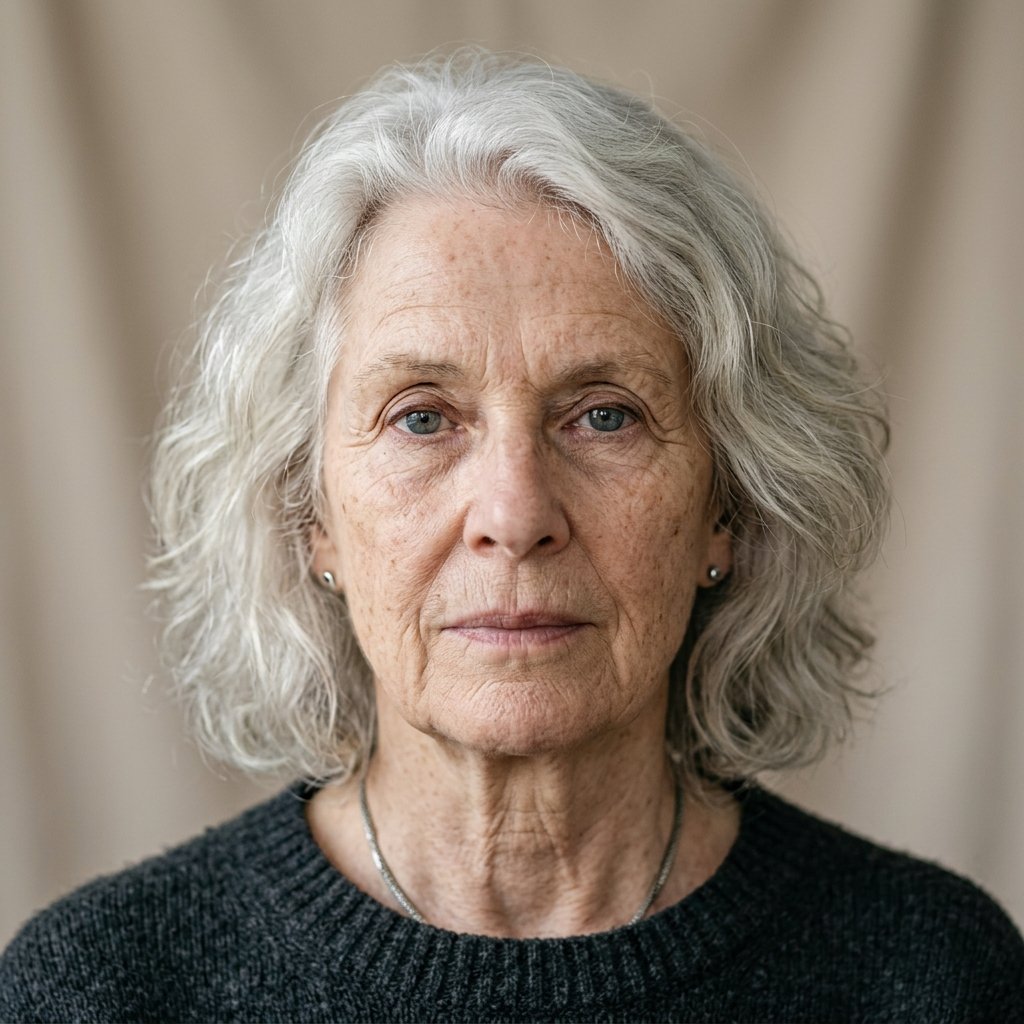
My mama folded the same cream-colored sweater four times without ever looking at my face.
It was a Sunday morning in late August, and the Savannah heat was already pressing against the window of Room 214 at the River Street Inn.
The air conditioner hummed softly, but my heart was beating so loud I thought it might shake the room.
Daddy stood by the door, his back half turned, jingling the keys to our gray SUV.
“We’ll only be gone for a few days, Dorothy,” Mama said, her voice as smooth as the fabric she kept smoothing.
“Patricia needs us right now.”
My sister was twenty-four years old, married to a decent man named Kenneth, and lived in a beautiful house in Augusta.
But she could turn a hangnail into a national catastrophe within five minutes.
I was nineteen, working two summer jobs—scooping ice cream at Leopold’s and bussing tables at The Olde Pink House—saving every penny for my freshman year at the University of Georgia.
This trip to Savannah was supposed to be our final family holiday together before I moved to Athens.
We had planned it for months.
We were going to walk through Forsyth Park, ride the riverboat, eat pralines on River Street.
Then Patricia called at six-thirty that morning, sobbing so loud I could hear her through the phone from across the room.
Kenneth wanted a trial separation.
That was all it took.
Within eight minutes, my parents had packed their overnight bags and were standing fully dressed, ready to race two hours west to comfort their golden child.
“She’s having a genuine crisis, honey,” Daddy said without turning around.
“Don’t make this more difficult than it already is.”
His knuckles were white around the keys.
Mama finally set the sweater down on the floral bedspread and reached into her purse.
She pulled out two crisp hundred-dollar bills and placed them on the nightstand next to the hotel phone.
“The room is paid through Friday,” she said quietly.
“You’ll be perfectly safe here. There’s a pool downstairs, and the front desk knows you’re staying. Just order room service if you get hungry.”
I stared at the money without touching it.
$200.
Two hundred dollars to disappear from their minds.
Something deep inside my chest went completely still.
I did not yell.
I did not beg them to stay.
I did not remind them that I was their daughter too.
I simply stopped expecting them to choose me.
It happened in an instant, like a switch I didn’t even know existed was flipped off.
Mama leaned down to kiss my forehead, and I let her.
I smelled her lavender perfume one last time.
“We love you so much, sweetheart,” she whispered.
“Please try to understand. Patricia has always been more fragile than you.”
More fragile.
That was the word she used.
What she meant was: You are the strong one, so you must suffer.
Daddy opened the door without looking back.
“Be good, Dorothy.
We’ll call when we get to Augusta.”
The door clicked shut behind them, and I was alone.
I walked to the window and pulled back the sheer curtain just in time to see their SUV pull out of the parking lot and merge onto Bay Street.
The brake lights flashed once at the intersection, and then they were gone.
Ten minutes later, my phone began vibrating with a fury.
Mama: We love you so much. Please understand. This hurts us too.
Daddy: Don’t be dramatic. We’ll be back before you know it.
Patricia: I’m so sorry, little sis. I know this stinks, but I really need them right now. Kenneth is breaking my heart.
I read each message carefully, like I was studying photographs of strangers.
The words felt foreign, empty things floating on a screen.
I typed out a reply to Patricia: “I needed them too. I guess that never mattered.”
My thumb hovered over the send button for a full minute.
Then I deleted the message, switched off my phone, and dropped it into my purse.
By noon, I had packed my small suitcase and walked down to the front desk.
“Checking out, Miss?” the clerk asked with a polite smile.
“Yes, ma’am,” I said.
“Would you like me to leave a message for your parents when they return?”
“No, thank you,” I replied.
“There’s nothing to say.”
I walked out into the blistering Savannah afternoon, the Spanish moss swaying in the live oaks, the cobblestones uneven beneath my sandals.
I did not go to the Greyhound station and buy a ticket back to Atlanta.
I did not call anyone for help.
Instead, I walked six blocks east until I reached a small diner tucked between a bookshop and an antique store on a quiet street.
The sign above the door read “Cora Lee’s Kitchen” in faded gold letters.
I had eaten breakfast there three days earlier with my parents, back when I still believed they might actually see me.
Cora Lee Patterson was a stout, silver-haired woman in her late sixties who wore a flour-dusted apron and had eyes that missed absolutely nothing.
She was wiping down the counter when I walked in, the little bell above the door chiming my arrival.
“Well, you’re back,” she said, not unkindly.
“Your folks not with you?”
“They had to leave,” I said.
“An emergency.”
She studied me with the sharpness of someone who had seen a lot of broken people walk through her door.
“Are you in some kind of trouble, child?”
“No, ma’am.”
I swallowed hard.
“I just need a job. And I was wondering if you still had that help wanted sign in the window.”
She didn’t look away.
“Are you running from something dangerous?”
The question hung in the air between us like the scent of frying bacon.
“No,” I said, and it felt like the truest thing I had ever spoken.
“Just something familiar.”
Cora Lee set down her rag and folded her arms.
“You any good at washing dishes?”
“I’m a fast learner.”
She hired me on the spot.
By sunset, I was standing elbow-deep in hot soapy water, scrubbing plates and listening to the low murmur of customers.
When the last patron left, Cora Lee led me up a narrow staircase behind the diner to a tiny room above the kitchen.
It smelled of coffee grounds and lemon-scented cleaning soap, and the window overlooked a small courtyard with a single magnolia tree.
“It ain’t fancy,” she said, “but it’s clean. You can stay here as long as you work for me. I’ll take fifty a week out of your pay for the lodging.”
“Thank you,” I whispered.
“One more thing.”
She paused at the top of the stairs.
“What’s your name, honey?”
I opened my mouth to say Dorothy, but the word wouldn’t come.
That name belonged to a girl who was invisible, a girl whose parents could leave her in a hotel with two hundred dollars and a pat on the head.
“Mae,” I said, giving her my middle name.
“Call me Mae.”
Cora Lee nodded slowly, as if she understood something profound was happening beneath the surface.
“Well, Mae, breakfast starts at six. I’ll have you on pancake duty tomorrow.”
And just like that, I became someone new.
The days turned into a gentle rhythm.
I woke each morning to the smell of biscuits baking, pulled on my apron, and worked alongside Cora Lee until my feet ached.
I learned how to flip pancakes without breaking them, how to brew coffee strong enough to wake the dead, and how to listen to the stories of old men who came in every morning for their usual.
For the first time in nineteen years, nobody compared me to Patricia.
Nobody told me to be more understanding.
Nobody asked me to shrink myself so someone else could shine.
I was simply Mae—the quiet girl with the quick smile who made excellent scrambled eggs.
The weeks blurred together like watercolors on a canvas.
I paid for my little room in cash, sent no letters home, and kept my phone switched off in a drawer beneath my spare socks.
I did not miss my parents.
I missed the idea of them, maybe.
I missed the parents I had hoped they could be.
But I did not miss the ache of always being second.
One afternoon, while I was wiping down tables, Cora Lee had the radio tuned to a local news station.
I wasn’t really listening until I heard the words “missing college student.”
My hand froze on the rag.
“Authorities in Atlanta are asking for the public’s help in locating a nineteen-year-old woman who was last seen in the historic district of Savannah,” the announcer said.
“Dorothy Mae Hewitt is described as five foot four with brown hair and green eyes. She was reported missing by her parents after they were unable to reach her following a family trip.”
My photograph was everywhere.
On the television mounted behind the counter, I saw my own yearbook picture flash across the screen.
And then I saw my parents.
Mama was crying, her mascara streaking down her cheeks, clutching one of my old stuffed animals from childhood.
Daddy’s jaw was tight, his eyes red-rimmed, as he spoke into a cluster of microphones.
“We just want our little girl home,” he said, his voice cracking.
“She disappeared without any warning. We are begging anyone with information to please come forward.”
Disappeared without warning.
Those words cut through me like a cold blade.
They never mentioned the hotel room.
They never mentioned the $200 left on the nightstand like a tip for a waitress.
They never mentioned that they abandoned me first, that they had looked me in the eye and told me my sister’s heartbreak mattered more than my entire existence.
I stood frozen behind the counter, a coffee pot trembling in my hand, while my own face stared back at me from the screen.
Cora Lee came up beside me, her expression unreadable.
She looked at the television, then at me, then back at the television.
“Mae,” she said quietly.
It wasn’t a question.
I set the coffee pot down before I dropped it.
“My name is Dorothy,” I whispered, the words tasting like ashes.
“And those people on the screen are my parents.”
Cora Lee didn’t say anything for a long time.
She just reached over and turned off the radio first, then the television, plunging the diner into a thick, buzzing silence.
“Do you want to go home?” she asked.
I looked at her, and for one terrible moment, I didn’t know the answer.
“I don’t have a home,” I said. “I never did. I had a house where I was tolerated.”
Cora Lee pulled out a chair and sat down heavily.
“Child, I’ve seen a lot of people walk through that door. Runaways, folks escaping bad situations. I never once judged them for doing what they had to do to survive. But I have to ask you—are you in danger?”
“No,” I said, and the tears finally spilled over.
“I’m just… invisible to them. I always have been. Patricia’s the one who needs rescuing. I’m supposed to be strong enough to take care of myself.”
Cora Lee took my hand, her rough, calloused fingers warm against my own.
“You listen to me. Being strong don’t mean you don’t deserve to be loved. It don’t mean you deserve to be left behind. But disappearing ain’t gonna fix the hurt. It just hides it for a while.”
I nodded, my throat too tight to speak.
“I won’t force you to call them,” she continued.
“That ain’t my place. But I want you to think real hard about what you want your life to look like from here on out. Running away is easy. Facing the people who broke your heart—that’s the hardest thing you’ll ever do.”
That night, I sat in my little room above the diner, the magnolia tree casting shadows across the wall, and I thought about my parents.
I thought about all the school plays where Daddy didn’t show up because Patricia had a dance recital.
I thought about all the birthdays where Mama forgot to bake a cake because Patricia had a crisis with a boyfriend.
I thought about the countless times I had been asked to understand, to be patient, to be the bigger person, simply because I was capable of standing on my own.
And I thought about that Sunday morning, the way Mama wouldn’t meet my eyes, the way Daddy kept his back turned, the way they both assumed I would just forgive them again.
Because I always had before.
But this time was different.
This time, I had tasted what it felt like to be seen as myself, not as the less important daughter.
This time, I had found a place where my name was simply Mae, and that was enough.
I didn’t call them that night.
I didn’t call them the next day.
For three more weeks, I stayed quiet, working at the diner, listening to the news reports slowly fade, watching the search efforts dwindle, hearing the speculation that maybe I had run off with a boy or gotten lost in the marsh.
Then one afternoon, a customer left behind a copy of the Atlanta Journal-Constitution.
My picture was on the fourth page, smaller now, alongside a quote from Patricia.
“My little sister and I were always so close,” she had told the reporter.
“I can’t understand why she would do this to us. Our parents are absolutely devastated.”
Close.
We were never close.
She never returned my calls unless she needed something.
She never asked about my life, my dreams, my fears.
But there she was, performing for the cameras, making herself the star of another tragedy.
I folded the newspaper and slid it beneath the counter.
Cora Lee saw me do it.
“You planning to stay hidden forever?” she asked.
“I don’t know,” I admitted.
“Maybe. Maybe not. But I’m not going back to being the invisible one. If I ever go back, it’ll be on my own terms, when I’m ready.”
She nodded slowly.
“Well, Mae—Dorothy—whoever you decide to be, you’ve got a job here as long as you want it. And you’ve got a friend.”
That night, I pulled my phone from the drawer for the first time in months.
I didn’t turn it on.
I just held it in my hands, heavy with all the messages I knew were waiting, all the pleas, all the demands.
And I felt a strange, quiet peace settle over me.
I was not running anymore.
I was choosing.
Choosing my own name, my own life, my own worth.
One day, maybe I would tell my parents the truth.
I would look them in the eye and say, “You left me. You made a choice. And now I’ve made mine.”
But not yet.
For now, I was Mae, the waitress who made excellent pancakes and never had to shrink for anyone.
For now, that was more than enough.
If this story touched your heart in any way, I would be deeply grateful if you could take a moment to like this post, follow our page for more heartfelt stories, and share it with someone who might need a reminder that every soul deserves to be seen and cherished. Your support means the world to us.