The phone call came at 6:47 on a Tuesday morning, and I remember the exact time because it came from a number I had spent nine years teaching myself not to answer.
It was my mother.
Her voice was thinner than I remembered, worn soft like a letter that had been folded and refolded too many times.
“Daniel,” she said. “Your father isn’t well. I didn’t want to trouble you. I know you have your own life now.”
Your own life. Three small words, and somehow they carried the weight of every holiday I had skipped and every birthday card I had never mailed.
I was standing in my kitchen in Chicago, coffee going cold in my hand, staring out at a skyline I had chased my entire adult life.
I had the corner office. The condo forty floors up. My name on a plaque beside the door.
And in that single moment, none of it meant a thing.
“How bad, Mom?” I asked, though I already dreaded the answer.
She went quiet. My mother, Ruth, was never quiet.
“The doctors say his heart is tired,” she finally whispered. “Danny, he asks for you. In his sleep. He says your name.”
I hung up, and for a long moment I just stood there, listening to the hum of the refrigerator and the distant sound of traffic below.
Nine years. That was how long it had been since I last set foot in Hartwell, Ohio.
Nine years since my father and I had stood in the driveway and said the kinds of things that can never truly be taken back.
He had wanted me to stay. To take over the family hardware store, the one his own father had opened with his bare hands after the war.
I had wanted the city. The bright lights. A bigger version of myself.
He called me ungrateful. I called him small. And then I got in my car and drove away without ever glancing in the rearview mirror.
My younger brother, Marcus, had stayed behind. He had wrapped an arm around our mother’s shoulders and promised, in front of everyone, that he would always look after them.
So I let myself believe they were fine. It was easier that way. It let me sleep at night.
But a promise made in a driveway is a fragile thing.
I packed a single bag that afternoon and drove east through the flat gold farmland, past the water towers and the little churches, until the highway narrowed into the two-lane road that led home.
When I finally turned into the gravel driveway, I put the car in park and just sat there, unable to move.
The house I grew up in looked like it was slowly giving up.
The porch sagged in the middle. The gutters hung loose from the eaves like broken arms. The white paint my father once touched up every single spring had peeled down to bare, gray wood.
This was a man who never let a screw stay loose for an hour. And now his own home was falling apart around him.
My hands were shaking when I climbed the steps and knocked on the door I had slammed nine years before.
My mother opened it, and my heart nearly stopped.
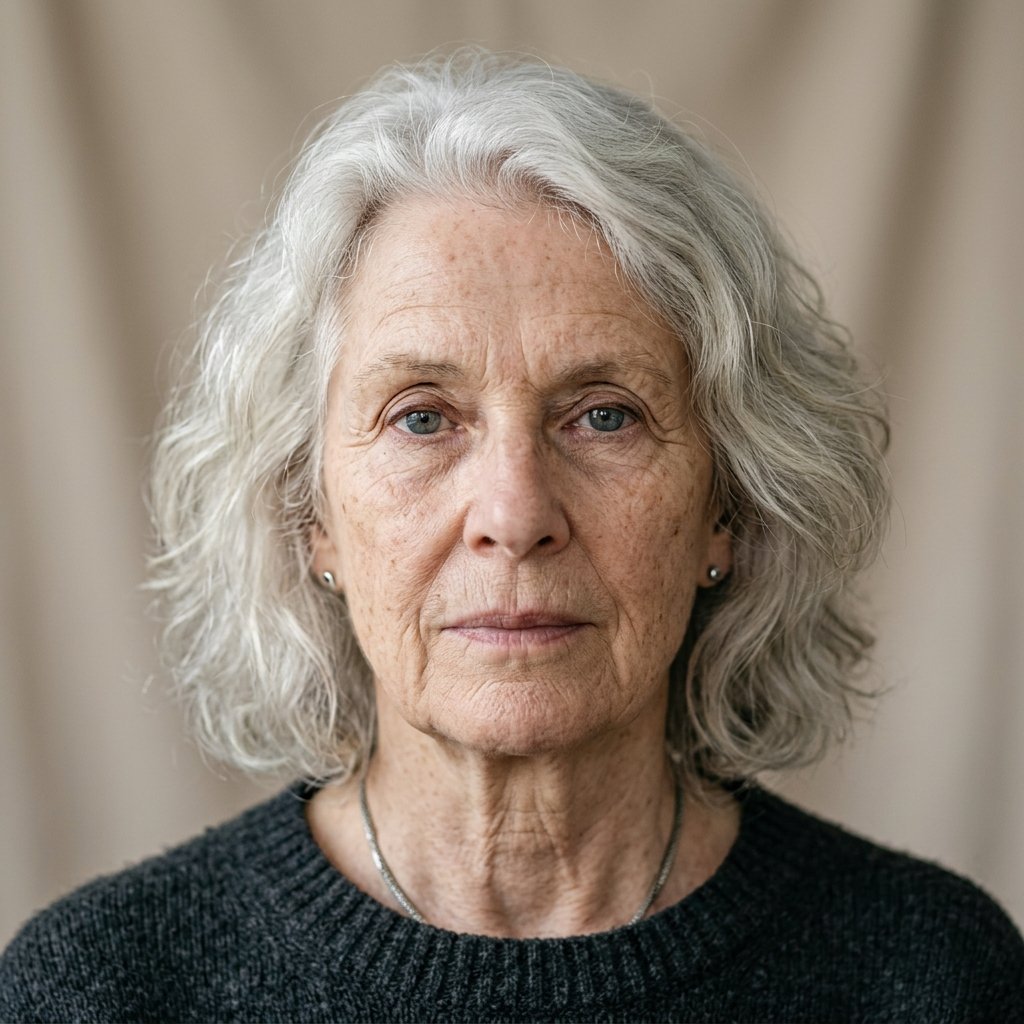
She had shrunk. Her hair had gone completely white, and her cardigan was two sizes too big, the sleeves hiding hands that trembled.
But when she saw me, her whole face crumpled, and she pressed herself into my chest like she was afraid I might dissolve.
“You came,” she kept saying. “You came, you came.”
Inside, the air was cold. Far too cold for a man with a tired heart.
When I asked about the furnace, she looked away and said they were being careful with the bills.
Careful. That word turned my stomach.
On the counter I found a folder of pharmacy receipts, each one marked with tiny handwritten notes. She had been paying for his heart medication in small installments, a few dollars at a time.
“Mom,” I said slowly. “Where is the money? Dad had savings. He had the store.”
She pressed her lips together and would not answer.
But I already knew. Somewhere deep down, I had known the second I saw that sagging porch.
Marcus. My brother, who had promised to take care of them, had been taking care of himself instead.
He had convinced our father, years ago, to sign the store over to him. He had sold it. He had drained the savings account they built one careful dollar at a time across forty years of early mornings.
And when the money ran out, so did he.
He stopped coming around. He stopped answering. He left two frail people alone in a freezing house, and he let my mother believe it was her job to make the rest stretch.
I felt a rage so hot it frightened me.
But before I could say a word, I heard it. A voice from the back bedroom.
Thin. Cracked. But unmistakably his.
“Ruth? Who is it?”
I walked down that narrow hallway, past the framed photos of Marcus and me as boys, and I stepped into the room where my father lay.
And the anger simply left me, all at once.
Because the man in that bed by the window was not the giant I remembered. Harold Whitmore, who could lift a full sheet of plywood over his head, now weighed almost nothing beneath a faded quilt.
His cheeks had sunk. His hands, once rough as tree bark, lay open and still.
He blinked at me for a long moment, like he wasn’t sure if he was dreaming.
Then his eyes filled, and his voice broke into a whisper.
“You came home.”
I knelt beside the bed and took his hand, and I felt nine years of silence crack open inside my chest.
“I’m here, Dad,” I said. “I’m not going anywhere.”
I called my office the next morning and quit. Just like that. No two weeks, no negotiation.
My assistant thought I had lost my mind. Maybe I had. Or maybe, for the first time in a decade, I had finally found it.
I moved into my childhood bedroom, the one with the faded wallpaper and the height marks still penciled on the door frame.
And I learned how to be a son again.
I learned to change his sheets without hurting his back. To warm his soup and blow on the spoon. To sit with him through the long nights when his heart fluttered like a bird trapped against a window.
I paid the pharmacy in full. I turned the heat back up. I hired a nurse to come mornings so my mother could finally rest.
And slowly, the house began to breathe again.
We didn’t speak about the past at first. We were both afraid of it, I think.
We simply existed together, father and son, quietly making up for the years we had thrown away.
I read to him from the newspaper. He told me stories about my grandfather. Some evenings we just watched the maple tree outside the window turn from green to gold.
Then, on a gray afternoon in October, he squeezed my hand and asked me for something strange.
“There’s a box,” he said. “In the attic. Behind the Christmas things. Bring it down for me. Please.”
I climbed the creaking ladder into that dusty attic and found it exactly where he said. An old wooden toolbox, one he had built himself, the wood worn smooth by decades of hands.
I carried it down and set it on the bed, and he nodded for me to open it.
Inside, there were no tools.
Inside were nine years of my life.
Newspaper clippings, yellowed and carefully cut. The announcement of my first promotion. A business article that mentioned my name in a single line. A grainy photo of the building where I worked, torn from a magazine.
He had saved every scrap. Every mention. All of it.
My hands trembled as I lifted them out, one by one.
At the very bottom lay a single envelope, sealed and soft with age. My name was written across the front in his blocky carpenter’s print.
“I wrote that the day you left,” he said quietly. “I could never bring myself to send it.”
I opened it. The paper shook in my fingers.
“Son,” it read. “I pushed you away because I was afraid. Not of losing you, but of watching you shrink yourself down to fit inside my small life. You were meant for bigger rooms than this town could give. I said cruel things so you would go and not look back. Forgive an old fool who loved you too proudly to ever say the words. Whatever you become, I am already proud. I always was.”
I could not speak. I could barely see the page through the tears.
Then my mother, standing in the doorway, told me the last piece.
The money for my college, all those years ago, had never come from the bank.
He had sold his tools. Every prized one. The saws, the planes, the instruments he had spent a lifetime collecting.
He sold the very thing that made him who he was, so that I could chase a life far away from him.
And he never breathed a word of it.
I laid my head down on his chest, and this proud, tired man wrapped his thin arm around me the way he had when I was a boy.
“I’m sorry, Dad,” I whispered. “For all of it.”
“No,” he said. “You came home. That’s all I ever wanted.”
He passed three weeks later, on a quiet morning, with my hand in his and my mother humming his favorite hymn beside the bed.
There was no fear on his face. Only peace.
Marcus came to the funeral. He wore a nice suit and shook a few hands and left before the casserole dishes were cleared.
I didn’t confront him. I looked at him, and I saw a man who would have to carry his own choices for the rest of his life, and I let that be enough.
My mother lives with me now. We planted a maple sapling in her yard, and some evenings we just sit and watch it grow.
I don’t regret the life I built in the city. I earned it, and I’m proud of it.
But I will spend the rest of my days wondering about the nine years I let slip through my fingers, over nothing but pride, on both sides.
That toolbox sits on my mantel now, full of clippings and one worn letter.
It is the most valuable thing I own.
So let me ask you, friend to friend. If that phone rang tomorrow, would you finally answer it? Have you ever let stubborn pride cost you the years you can never get back? What would you have done in my place?