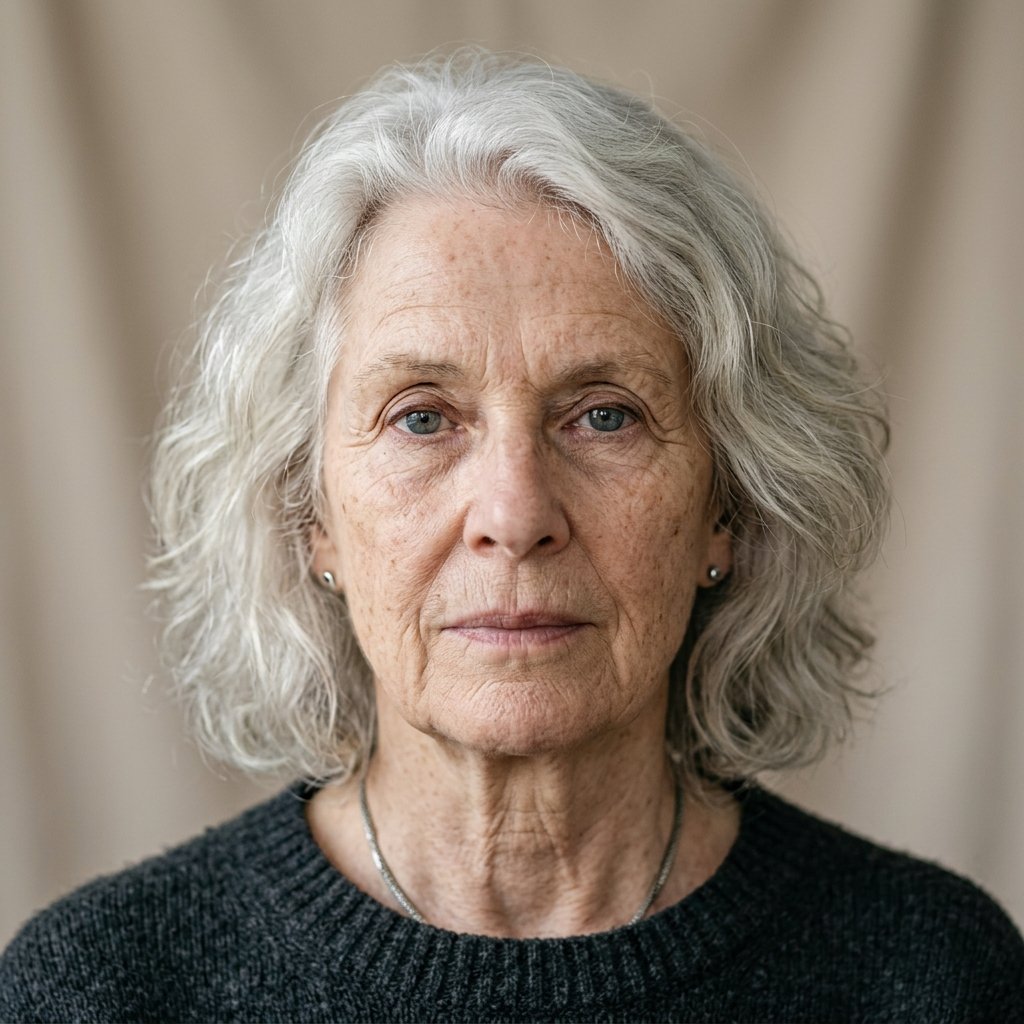
I never imagined a single dollar could change my entire life.
But on a biting December afternoon, at Philadelphia’s crowded 30th Street Station, that’s exactly what happened.
The woman who stood there with her trembling hand outstretched was me.
My name is Margaret Hayes.
And until that moment, I had been invisible to the world for eight agonizing months.
“Sir, please. Just a dollar.”
The words came out hoarse and desperate.
I barely recognized my own voice anymore.
The cavernous hall of the station echoed with the relentless rhythm of footsteps and overlapping announcements.
People rushed past me like water around a stone.
I had become nothing more than a ghost in layered, threadbare sweaters, my hair matted under a wool cap that had seen better decades.
My hands were chapped, the skin cracked from cold and neglect.
I wasn’t shivering from the weather.
I was shaking because I had reached the absolute bottom of hope.
The man I had spoken to was tall, impeccably dressed in a long wool coat, his posture radiating a quiet authority.
I didn’t look directly at his face.
After months on the streets, you learn not to make eye contact.
It only invites trouble or disgust.
But something made me glance up just as he stopped walking.
He stopped dead, right there in the middle of the rushing crowd.
People behind him had to swerve abruptly, grumbling under their breath.
But he didn’t seem to notice them at all.
His entire attention was fixed on me.
It was then that I recognized him.
Richard Sterling, the legendary basketball player.
I had watched his games on television years ago, back when I had a television.
When I had a home.
When I was still a person.
A wave of shame crashed over me so fiercely that I nearly pulled my hand back and fled.
But his eyes held me in place.
They weren’t filled with pity or annoyance.
They were searching my face as if he was trying to place a distant memory.
“What’s your name?” he asked.
His voice was low and gentle, the kind of voice you’d use to comfort a frightened child.
I stood there, utterly stunned.
No one ever asked my name.
Not the commuters who occasionally dropped spare change into my cup.
Not the security guards who shooed me away from the heated waiting areas.
No one saw me as a human being with a history.
“Margaret,” I finally managed to say, the word cracking on my lips. “Margaret Hayes.”
He repeated it softly, as if tasting the syllables for familiarity.
“Margaret Hayes,” he said. “How long have you been out here?”
“Eight months,” I whispered, eyes burning with tears I was too exhausted to hold back.
The question opened a wound that had never truly healed.
Every day on the streets had peeled away another layer of my dignity.
“What did you do before this, Margaret?”
His use of my name felt like a warm blanket being draped over my shoulders.
I looked down at the grimy floor, my throat tightening.
“I was a nurse,” I said, my voice barely audible. “For twelve years. ICU at the Hospital of the University of Pennsylvania.”
A small gasp escaped the small crowd that had begun to gather around us.
Phones were being raised, recording our exchange.
But I didn’t care about any of that.
I was drowning in the memory of my former life.
“I saved lives,” I continued, the tears now streaming freely down my cheeks. “I held hands, I comforted families, I fought death every single shift.”
Richard Sterling took a small step closer.
The crowd pushed in, but he seemed to create a private bubble around us.
“What happened?” he asked, so quietly it was almost a whisper.
The question demolished the last of my defenses.
“The pandemic,” I said, the word tasting like ash in my mouth. “I lost so many patients. So many faces. I would close my eyes and see them all, lined up in my mind. I couldn’t stop seeing them. I had… a breakdown.”
I paused, gasping for air.
“They called it burnout with severe anxiety and depression. But it felt like my soul had shattered into a million pieces. I couldn’t function. I couldn’t get out of bed. So I lost my job. Then I couldn’t pay my rent. Then my car was repossessed. And before I knew it, I was sleeping in shelters that were full to bursting. Then not even that.”
I gestured weakly at my filthy clothes, my cracked shoes.
“This is what I am now.”
Richard Sterling didn’t flinch.
He just stood there, absorbing every word, his jaw tight with an emotion I couldn’t read.
A woman in the crowd muttered, “Oh, that poor dear.”
Someone else called out, “Help her, Richard!”
But he ignored them all.
“Do you still have your nursing license, Margaret?” he asked.
I nodded slowly, wiping my nose with the back of my hand.
“It’s lapsed,” I admitted. “But I was too ashamed to try to renew it. How could I be trusted to care for anyone when I had fallen this far?”
He reached into the pocket of his expensive coat, and for a brief, crushing second, I thought he was finally going to hand me that dollar and walk away.
Instead, he pulled out a clean handkerchief and pressed it gently into my palm.
“I have a story for you, Margaret,” he said, his voice suddenly thick with emotion. “Five years ago, my father was in a terrible car accident. He was rushed to the Hospital of the University of Pennsylvania. He was in the ICU for four days. The family was scattered across the country, and I was in the middle of the playoffs. I flew in as fast as I could, but I was too late. He passed away before I could get there.”
My heart started to pound inexplicably.
Richard continued, his voice trembling just slightly.
“When I finally arrived, the head nurse told me that a wonderful ICU nurse had stayed with my father through the very end. She held his hand. She spoke to him calmly. She told him his family loved him. She wouldn’t let him die alone. And she cried with him when he took his last breath.”
he stopped and looked directly into my eyes.
“That nurse’s name was Margaret Hayes.”
The world tilted around me.
I felt my knees buckle, and I had to grab onto a nearby pillar to keep from collapsing.
The memory flooded back—that quiet elderly man with the kind eyes, the machines beeping softly, the frantic calls to family members who couldn’t arrive in time.
I had stayed with him for hours, reading to him from a small Bible I kept in my locker, telling him it was okay to let go.
“Oh my goodness,” I breathed, covering my mouth with the handkerchief. “Mr. Sterling. I remember him. I remember him so clearly.”
Richard nodded slowly, a tear escaping down his own chiseled cheek.
“I searched for you afterward,” he said. “I wanted to thank you personally. To tell you how much it meant to my mother, my sisters, to me, that he wasn’t alone. But when I contacted the hospital, they said you had left under difficult circumstances and they couldn’t provide your contact information. I tried to find you, but I couldn’t locate you anywhere.”
He reached out and took my cold, dirty hand in both of his.
“And now, here you are. In this station. Asking me for a dollar like a stranger.”
The crowd was utterly silent now, many people openly weeping.
A security guard who had been approaching to break up the gathering stood frozen, his hand on his radio.
“Margaret,” Richard said, his voice firm now, filled with conviction. “You showed my father the greatest kindness a human being can offer. You were his angel in his final moments. And I believe with all my heart that God placed you in front of me today for a reason.”
I was sobbing so hard I could barely speak.
“I’m going to ask you something,” he continued, “and I want you to really think about it. Will you come with me? Not for a dollar. Not for a handout. But to rebuild your life. I have a foundation that supports healthcare workers in crisis. I have resources, connections. And I need someone like you—someone with a heart that refuses to stop caring, despite everything—to help me run the wellness program. You’ll have a place to live, a decent salary, and all the support you need to get back on your feet.”
I stared at him, completely overwhelmed.
“Why?” I finally choked out. “Why would you do this for someone like me?”
He smiled then, a warm, gentle smile that crinkled the corners of his eyes.
“Because once upon a time, you did it for my father when you had no reason to. And you didn’t ask for anything in return. Now it’s my turn.”
The rest of that afternoon is a blur of overwhelming kindness.
Richard personally escorted me out of the station, past the stunned onlookers who were now applauding and wiping their eyes.
His driver was waiting outside, and Richard opened the car door for me himself, treating me like I was a queen instead of a homeless woman.
We went to a hotel where the staff, clearly accustomed to famous guests, treated me with a dignity I had long forgotten I deserved.
Within hours, I had a hot shower, clean clothes that actually fit, and a warm meal that I could barely eat because I was still shaking with emotion.
Richard arranged for a doctor to see me, to make sure I was physically okay after my months on the streets.
He contacted the nursing board and paid the fees to renew my license, then enrolled me in a program for mental health recovery specifically designed for frontline healthcare workers.
Over the weeks that followed, my transformation felt nothing short of miraculous.
I started attending therapy sessions that truly understood the trauma of what I had endured in the ICU during those dark years.
I moved into a small but beautiful apartment that Richard’s foundation provided as part of the employment package.
And slowly, ever so slowly, I began to feel like Margaret again—the nurse, the healer, the woman who had once found her greatest purpose in easing the suffering of others.
I now work as the coordinator of the Sterling Foundation’s Wellness for Warriors program, connecting burned-out medical professionals with the resources they need to recover.
Every day, I speak with nurses and doctors who are exactly where I was—on the brink of losing everything, believing no one sees their invisible wounds.
And I tell them my story.
I tell them about the freezing afternoon in the train station, about the man who stopped when everyone else rushed by, about the sacred connection of a shared memory that turned a desperate plea for a dollar into a second chance at life.
Richard Sterling remains a close friend and mentor.
Sometimes we have coffee together, and he’ll ask me to recount the story of his father’s final hours again.
I always do, with tears in my eyes, because it’s a testament to how a single act of compassion can ripple across years and change lives in ways you could never possibly imagine.
The last time I visited my old spot in 30th Street Station, I wasn’t there to ask for anything.
I was there with a box of warm meals, handing them out to the men and women who still sat along the walls with their cardboard signs and their haunted eyes.
And I made it a point to learn each of their names.
Because that, I have come to understand, is the first and most powerful step back to humanity.
If you were moved by my story, I would be deeply grateful if you could like our page, follow along for more stories of hope, and share this post with someone who might need a reminder that miracles still happen.
Sometimes, they arrive when you think you’re only worth a single dollar.