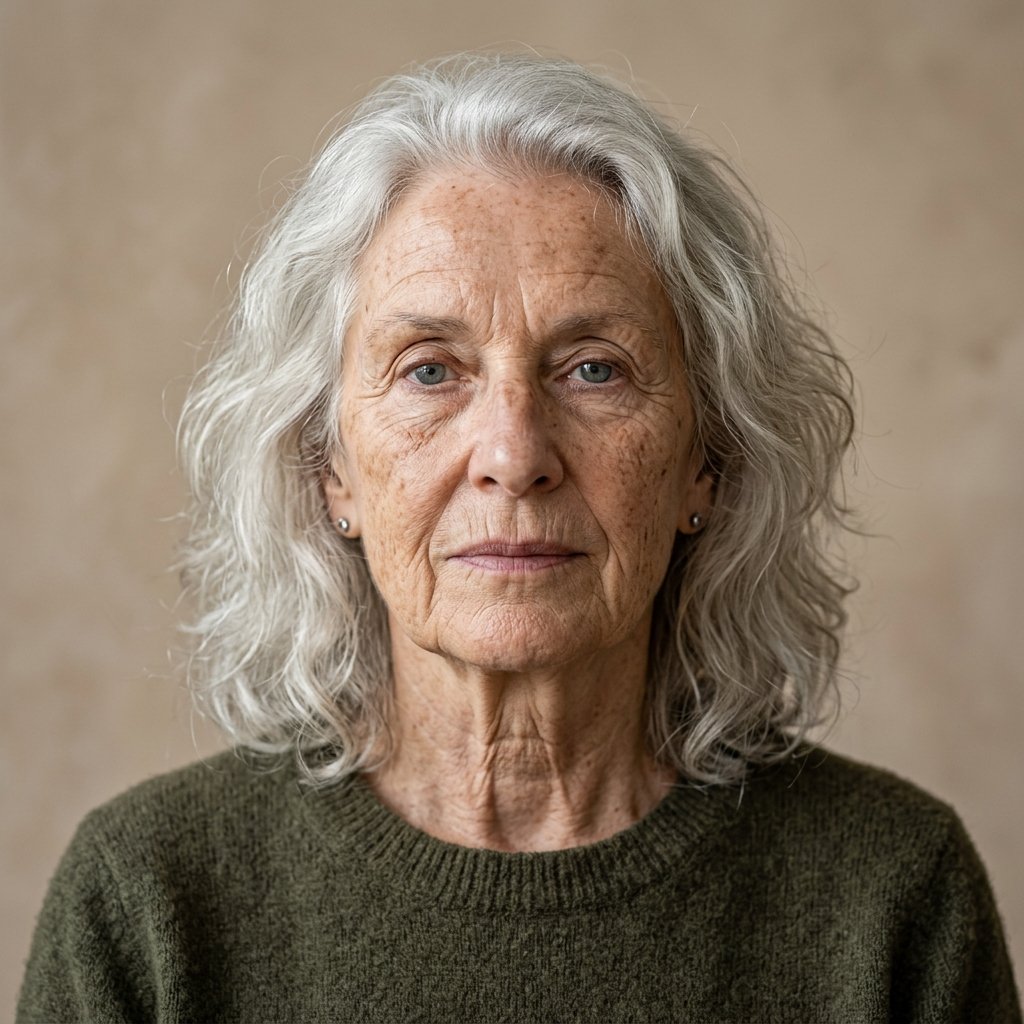
The morning of my 65th birthday, I woke up to the same silence I had known for twenty years.
My husband, Richard, had passed away when I was 45, leaving me with a quiet house on Lilac Lane in the tiny town of Maplewood, Maine. The children, Emily and David, had long since moved to Boston and Seattle, swallowed up by their own busy lives. They called twice a year, maybe. Visits were even rarer.
I spent the day doing what I always did: feeding the birds, pruning the rose bushes, and sitting by the window to watch the street. But something inside me cracked that afternoon. Not a single person had remembered my birthday. Not one card, not one call. The phone sat dead on the hook.
So I did something completely out of character. I decided to be reckless.
I put on my best blue dress—the one with the lace collar I’d saved for church—and applied a touch of lipstick. Then I walked to the bus stop and caught the evening bus into Portland.
The city lights felt like a foreign country. I walked past restaurants and shops until I spotted a small bar with warm yellow light spilling onto the sidewalk. The sign said “The Rusty Lantern.” I pushed open the door, heart hammering like a schoolgirl’s on a first date.
Inside, the music was soft, something jazzy. A few couples sat at tables. I chose a secluded corner and ordered a glass of red wine. The first sip burned, then soothed. I closed my eyes and let the noise of the city fade.
“Is this seat taken?”
I opened my eyes to see a man standing there. He looked to be in his early forties, with salt-and-pepper hair, kind brown eyes, and a camera slung over his shoulder. He had crow’s feet that deepened when he smiled.
“No,” I said, feeling suddenly flustered. “Please.”
He sat down and ordered a whiskey. I focused on my wine, certain he’d lost his way. But then he spoke again.
“Forgive me for being forward, but you have the most remarkable face. So much character. I’m a photographer, and I can’t help but notice light.”
I actually laughed out loud. “I’m 65 years old, young man. My character is mostly wrinkles.”
He chuckled and leaned forward. “Wrinkles are just proof of laughter and tears. I’d be honored to buy you another drink. May I?”
“You may,” I said, “but don’t call me ‘young man.’ I’m old enough to be your mother.”
“Then I’ll call you beautiful. What’s your name?”
I hesitated, the wine loosening my tongue. “Margaret. But everyone calls me Maggie.”
“Maggie,” he said, as if tasting the word. “I’m James.”
We talked for hours, the way strangers sometimes do, sharing secrets they’d never tell their families. He told me he traveled the world for his work, photographing faces in villages and cities. He’d just returned from a long assignment in South America.
“What do you photograph?” I asked.
“The invisible people,” he said quietly. “The ones society forgets. The elderly, the homeless, the lonely. I try to show their beauty.”
I looked down at my wine glass. “Then you’ve found a perfect subject. I’m practically invisible.”
He reached across the table and placed his hand over mine. “Not to me.”
His touch sent a jolt through my whole body. It had been so long since anyone had touched me with kindness. My own children barely hugged me anymore.
I don’t know if it was the wine or his eyes or the loneliness that had been eating me alive for two decades, but I made a decision right then. A crazy, wonderful, terrifying decision.
“James,” I said, my voice trembling, “I haven’t been held in twenty years. I don’t want to go home to my empty house tonight.”
He studied my face for a long moment. “Are you sure?”
“I’m sure.”
We left the bar and walked a few blocks to a small inn called The Garden House. The night air was crisp, and I remember the way the streetlights haloed his silhouette. He didn’t say much, just held my hand as if I were made of glass.
The room was simple but clean. Floral wallpaper, a quilt on the bed, lace curtains. I stood by the window, suddenly terrified. What was I doing? I was a grandmother, for heaven’s sake. A widow. A woman who baked pies for church fundraisers.
James came up behind me and gently turned me around. “You’re trembling.”
“I’m scared,” I admitted. “I’m 65 years old. My body isn’t what it used to be.”
“Maggie,” he whispered, “you are beautiful. Let me show you.”
And he did.
I won’t describe the details of that night because some things are sacred. But I will say this: for the first time in twenty years, I felt like a woman. Not a widow, not a mother, not a forgotten old lady on a porch. Just a woman, alive and desired. He was gentle and patient, and he looked at me as if I were a masterpiece.
Afterward, I fell asleep in his arms, lulled by the steady rhythm of his heartbeat.
The next morning, sunlight cut through the curtains like a knife. I stirred, reaching out for James, wanting to say good morning with a shy smile.
My hand found cold sheets.
I sat up quickly, heart pounding. The other side of the bed was empty. His clothes were gone. His shoes by the door—vanished. It was as if he had never existed.
Then I saw it: a white envelope propped carefully against the lamp on the bedside table. Next to it lay a room key and a single red rose.
My hands shook so badly I could barely pick up the envelope. I tore it open, and something slid out onto the quilt.
A photograph.
It was me, sleeping. The yellow glow of the bedside lamp softened the lines on my face. My silver hair fanned across the pillow. My expression was peaceful, utterly serene. I looked… beautiful. Not like the tired old woman I saw in my mirror, but something else. Something brave and fragile and deeply human.
Behind the photograph, someone had scribbled a note in neat handwriting. I held it up to the light and read:
“Dear Maggie,
Thank you for showing me that old age can be beautiful and brave, too. You gave me a gift I have been searching for my entire career: the face of someone who has loved, lost, and still found the courage to be vulnerable. This photograph will be my most treasured work.
But I’m sorry I didn’t tell you the truth from the start. I am not just a traveler passing through. I am a man on a mission—a very personal one. My own mother, Eleanor, died five years ago in a nursing home, utterly alone and believing she had become invisible. I was away on assignment and never got to say goodbye. Since then, I have made it my life’s purpose to find people like her, and like you, and to show them they are seen. I offer companionship, not as a charade, but as genuine human connection. Last night was real, Maggie. Every moment.
Please don’t be angry. I should have been honest from the beginning. But I was afraid you would refuse, and I couldn’t bear to see another beautiful soul spend her birthday alone.
With gratitude and respect,
James”
I read the note three times, my vision blurring with tears. Part of me wanted to be furious. He had deceived me. He had made me feel special, only to reveal it was part of some personal crusade. But another part—a deeper, wiser part—understood.
He had given me something priceless. Not just a photograph, but proof that I was not invisible. Proof that at 65, I could still be seen, still be touched, still be loved.
I sat on the edge of the bed, clutching the note and the picture, and I cried. Not tears of sorrow, but tears of release. All the loneliness I had been carrying for twenty years came pouring out.
An hour later, I checked out of the inn. The clerk, a young woman with kind eyes, asked if I had enjoyed my stay.
“Yes,” I said, and for the first time in a long while, I meant it. “It was wonderful.”
On the bus ride back to Maplewood, I thought about James. I would never see him again, I knew that. But he had left me with a seed of something important: the knowledge that I still mattered.
When I got home, the house didn’t feel quite so empty. I made myself a cup of tea, sat in my favorite chair, and propped the photograph on the mantel. Then I picked up the phone and called Emily.
“Mom?” she answered, sounding surprised. “Is everything okay?”
“Everything’s fine,” I said, my voice stronger than it had been in years. “I just wanted to hear your voice. And I want you to know something: I love you, and I’m proud of you, but I’ve been very lonely. I think I need to start living again.”
There was a long pause. Then Emily said, “I’m so sorry, Mom. I should have called on your birthday. I just got so busy with the kids—”
“I’m not angry,” I interrupted gently. “I’m just telling you the truth. I’m going to be okay. I’m going to join a book club, maybe take a painting class. I’m done waiting by the window.”
We talked for another hour, really talked, the way we hadn’t since she was a teenager. It was a start.
That night, I stood on my porch and watched the sunset paint the sky in shades of gold and pink. I thought about James and his mother Eleanor. I thought about all the lonely people in the world, hidden in plain sight. And I made a silent promise: I would not be one of them anymore. I would find ways to connect, to give back, to be seen.
Because sometimes, the most profound gifts come wrapped in the guise of a stranger.
That photograph still sits on my mantel. It’s a reminder that even in the twilight of life, there is beauty. There is bravery. And there is always, always hope.
If this story touched your heart, please take a moment to Like our page so you never miss another inspiring tale. Share this with a friend who might need to hear that they are seen and loved, no matter their age. And Follow us for more stories of human connection and quiet miracles. We’d be honored to have you in our community.