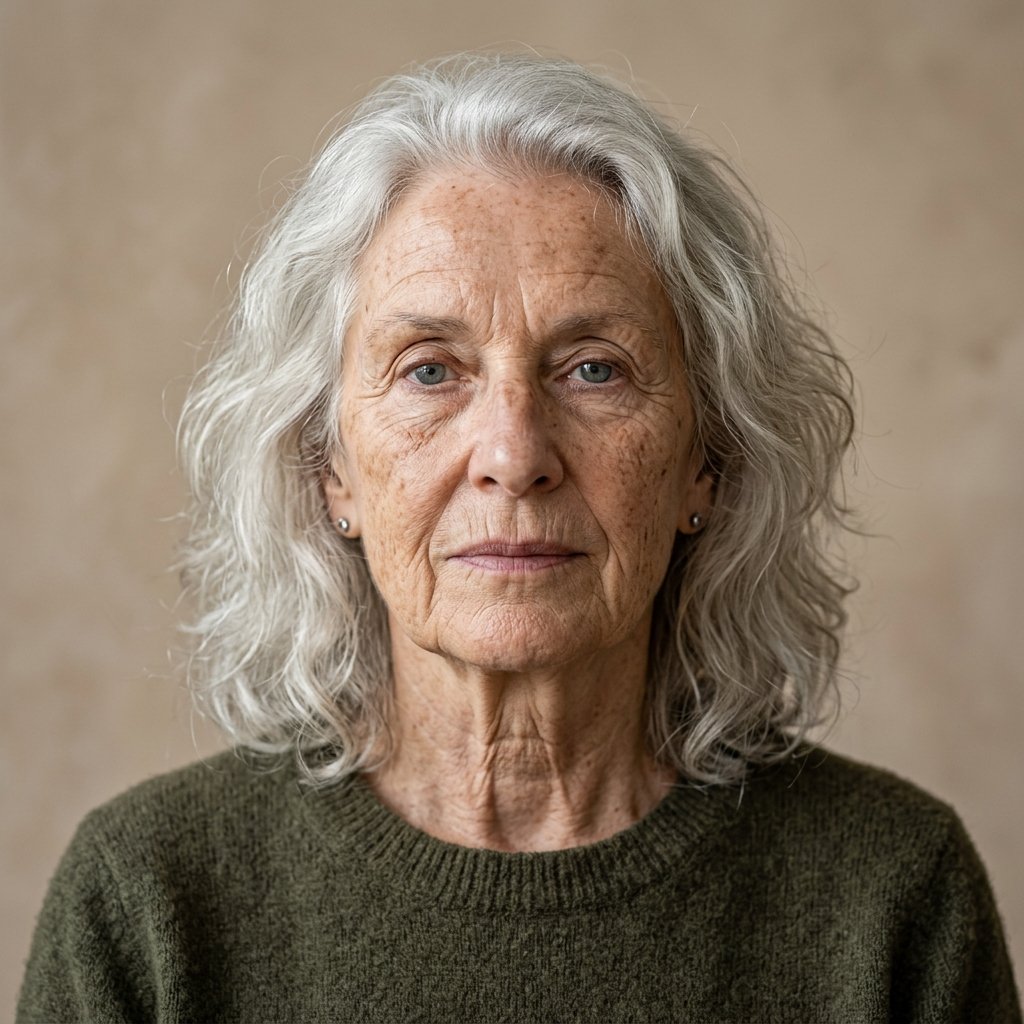
I was eight years old when my aunt poured a kettle of boiling water over my face.
I remember every second of it—the hiss of the steam, the flash of rage in her eyes, and the smell of my own skin burning.
But what I remember most is how no one believed me.
This is the story of how a little girl survived pure cruelty, and how she rose from the ashes of her own face.
I’m Emily, and this is my life.
My mother’s name was Sarah.
She was the kindest woman in our little town of Willow Creek, Ohio.
Her laugh filled every room, and she sang old hymns while she baked apple pies.
I can still smell the cinnamon and nutmeg on her apron.
I was seven when she got pregnant with my little brother, Lucas.
My father, David, was a construction worker—big hands, tired eyes, but a heart full of love.
He’d come home covered in dust and lift me onto his shoulders.
“You’re my little star, Emily,” he’d say.
We were poor, but we were happy.
Then everything changed.
The night Mama went into labor was stormy.
I remember the wind howling against the windows and my father’s panicked voice on the phone.
The ambulance took her to the hospital in Columbus.
I stayed with our neighbor, Mrs. Patterson, who held my hand and prayed.
The next morning, my father came home alone.
I’ll never forget the look on his face—hollow, broken, like a man who’d seen the bottom of the ocean.
He knelt in front of me, his rough hands trembling.
“Emily, baby, Mama had to go be with Jesus,” he whispered, his voice cracking like old wood.
“She loved you so much. So, so much.”
I didn’t understand at first.
I kept looking at the door, waiting for her to walk in with her warm smile and singing voice.
But she never did.
My baby brother Lucas was tiny and fragile, born too early.
He stayed in the hospital for weeks, and my father spent every spare moment there.
I felt like I’d lost both of them at once.
A few weeks after the funeral, my father sat me down in our tiny kitchen.
His eyes were red, and he kept rubbing his hands together like he was trying to start a fire.
“Emily, I have to go back to work in Columbus,” he said slowly.
“And Lucas needs special care. The doctors say he’s getting stronger, but I can’t take care of you both at the same time. It breaks my heart to say this, but you’re going to stay with your Aunt Patricia for a while.”
Aunt Patricia was my mother’s older sister.
I’d only met her a few times at family gatherings, and she always seemed sharp and distant.
But my father assured me.
“She’ll treat you like her own daughter,” he said, cupping my chin.
“It’s only for a little while. I promise I’ll come back for you.”
I believed him.
I was eight years old, and I believed my daddy.
The day he drove me to Aunt Patricia’s house, I pressed my face against the car window and watched our little town disappear.
Aunt Patricia lived on a big, old farm on the edge of the county, with a white house that looked grand from the outside.
Inside, it smelled of lemon polish and something sour underneath.
She stood on the porch with her two sons, Ethan and Ryan, who were older than me, wearing pressed khakis and collared shirts.
Aunt Patricia was tall and thin, with hair pulled back so tight it stretched her forehead.
Her smile didn’t reach her eyes.
“Well, here she is,” she said, like I was a package she’d been expecting.
My father hugged me so tight I couldn’t breathe.
“I love you, Emily. Be good. I’ll visit soon.”
I watched the taillights fade down the gravel road until I couldn’t see them anymore.
That was the last time I saw my father for two years.
The first night, I was shown to a thin mat in the corner of the kitchen.
No bed, no pillow, just a worn-out blanket that smelled of damp.
“You’ll sleep here,” Aunt Patricia said, pointing.
“Breakfast is at six. You’ll help with the dishes before school.”
Ethan and Ryan had their own rooms with real beds, posters on the walls, and lamps shaped like baseballs.
I stared at the ceiling that night, listening to the refrigerator hum, and cried silently into my sleeve.
I whispered, “Mama, I miss you. Why did you leave me? Why did Daddy leave me?”
There was no answer.
The abuse started subtly.
At first, it was cold words and harsh glances.
“Don’t touch that,” she’d snap.
“You eat after everyone else. You’re not a guest in this house—you’re a burden.”
Within a week, the slaps began.
I remember the first one: I’d spilled a little flour while trying to bake biscuits.
Her hand cracked across my cheek so hard I saw stars.
“Clumsy, worthless girl!” she yelled.
“Do you think flour grows on trees? My husband left me with nothing, and now I have to feed you too?”
Her husband had run off with a younger woman from Dayton, and she carried that anger like a stone in her chest.
Every day, she found a reason to let it out on me.
If I didn’t scrub the floor well enough, I’d get a wooden spoon across my back.
If I spoke without being spoken to, a pinch on my arm that left bruises.
I learned to be invisible, but even invisibility wasn’t enough.
I hauled water from the well, scrubbed the bathrooms until my hands were raw, and washed piles of dishes.
My cousins Ethan and Ryan watched, sometimes smirking, sometimes ignoring me entirely.
They had clean clothes, fresh bread with butter, and new shoes every fall.
I wore hand-me-downs that were torn and stained, and my shoes had holes that let the cold seep in.
At night, after everyone was asleep, I’d sit by my mat and whisper to my mother.
“Mama, do you see me? Do you see what’s happening?”
Sometimes I’d imagine her voice, soft and sweet, telling me to be strong.
It was the only comfort I had.
School was my only escape.
I’d walk two miles down the country road to the little elementary school, with my stomach growling and my back aching.
But inside that classroom, I felt like a real person.
My teacher, Mrs. Henderson, was a gentle woman with silver hair and kind eyes behind her glasses.
She noticed I was quiet, that I kept my head down, that I flinched when anyone moved too quickly.
One day after class, she asked me to stay behind.
“Emily, is everything all right at home?” she asked softly.
I stared at my desk, tracing a crack in the wood.
“Yes, ma’am,” I lied.
She lifted my chin gently and saw the fading bruise on my cheek.
“That doesn’t look like a fall. Sweetheart, you can tell me anything.”
But I couldn’t.
Aunt Patricia had warned me: “If you ever tell anyone, I’ll send you to a place far worse than this. You’ll never see your father or your brother again.”
So I just shook my head and said I was clumsy.
Mrs. Henderson looked at me with such sadness, and I think she knew.
“You have a gift, Emily,” she said instead.
“Your writing, your mind—it’s bright. Don’t let anyone make you feel small. You hear me?”
I nodded, and I clung to those words like a lifeline.
But when I went back to that house, the light inside me felt dimmer every day.
One Saturday morning, everything shattered.
It was a crisp autumn day, with leaves skittering across the yard.
Aunt Patricia told me to cook a pot of rice while she went to the market.
“Watch it carefully,” she ordered.
“If you burn it, you’ll regret it.”
I was also told to sweep the entire yard, front and back, before she returned.
So I put the rice on the stove and ran outside with the broom.
But the yard was huge, and I was small and tired.
The leaves kept falling, and I kept sweeping, my arms aching.
I lost track of time.
When I finally rushed back inside, the kitchen was filled with the acrid smell of burning rice.
The bottom of the pot was black, and a thin wisp of smoke curled upward.
My heart stopped.
I knew what was coming.
I heard the front door open, and Aunt Patricia’s footsteps clicked on the hardwood floor.
She walked into the kitchen, her eyes darting from the pot to me.
The silence was worse than shouting.
Then her face twisted into a mask of pure fury.
“Useless girl!” she screamed, her voice echoing off the walls.
“Do you know how much rice costs? Do you think I’m made of money? I waste my life feeding a parasite like you, and this is how you thank me?”
“Auntie, I’m sorry,” I stammered, backing away.
“I was sweeping the yard, I didn’t mean to—”
“You didn’t mean to? You NEVER mean to!”
Her hand flew to the stove, and she grabbed the kettle that had been sitting there, water just reaching a rolling boil.
I saw it happening in slow motion.
I tried to run, but my feet were rooted to the floor.
“No, please, Aunt Patricia, please!” I cried, my voice breaking.
But there was no mercy in her eyes.
She lifted the kettle high and, without a moment’s hesitation, poured the boiling water directly onto my face.
The pain was beyond anything I can describe.
It was like fire and lightning and a thousand needles all at once.
I heard a scream that I didn’t recognize as my own—a high, animal wail that came from the deepest part of my soul.
“My face! Mama! MAMA!” I shrieked, clawing at the air, falling to the floor.
The water had splashed across my left cheek, my eye, my forehead.
My skin bubbled and peeled instantly.
I writhed on the cold linoleum, the world spinning into a blur of agony.
Through the haze, I saw Ethan and Ryan standing in the doorway, their faces white with shock.
They didn’t move.
They just stared.
Aunt Patricia stood over me, the kettle still in her hand, her breath coming in ragged gasps.
“Now you’ll learn,” she spat.
“Foolish, ungrateful girl. Maybe now you’ll remember your place.”
She dropped the kettle on the stove as if she’d just finished a chore.
I don’t know how long I lay there, sobbing and shaking.
Eventually, a neighbor named Greg heard the screams from across the field.
He was a burly man with a kind heart, and he kicked the door open without a second thought.
When he saw me on the floor, he fell to his knees.
His hands hovered over my face, not knowing what to do.
“Oh, sweet Jesus,” he whispered, his voice trembling.
“What in God’s name happened here?”
“She… she poured boiling water on me,” I managed to choke out between sobs.
Greg looked at Aunt Patricia, who was now twisting a dish towel in her hands, her face a mask of pretend concern.
“It was an accident,” she said quickly.
“She was playing near the stove and pulled it on herself. I told her a hundred times not to.”
Greg didn’t argue. He wrapped me in a clean, wet cloth as gently as he could and carried me to his truck.
The ride to the clinic was a blur of searing pain and muffled prayers.
I kept whispering for my mama, over and over.
Greg’s voice was steady: “Hold on, little one. Just hold on.”
At the Willow Creek Community Clinic, the nurses took one look at me and gasped.
Nurse Amelia, a motherly woman with a soft voice, led me to a bed while calling for the doctor.
“Who did this?” she asked, her eyes wide with horror.
“This isn’t an accident. This is boiled water! This is… this is cruelty.”
Dr. Collins was an older man with steady hands.
He cleaned my wounds, his jaw clenched tight with controlled anger.
My left eye was swollen completely shut.
The skin on my cheek and forehead was blistered, red, and already beginning to scar.
“You’re going to be okay, sweetheart,” he said gently, but his eyes told a different story.
For days, I couldn’t eat solid food.
The pain shot through my face every time I moved, every time I tried to speak.
I’d startle at loud noises, even in my sleep, reliving the splash of the boiling water again and again.
When I finally saw my reflection in a small hand mirror, I didn’t recognize the girl staring back.
My skin, once smooth and young, was now twisted and puckered, like melted wax.
My left eye drooped slightly from the damage.
I touched the mirror with my fingertip and whispered, “Is this… me?”
The silence that followed was the loneliest sound I’ve ever heard.
The police were called.
Officer Daniels came to the clinic, a tall man with a badge and a notepad.
He sat beside my bed and asked me gently what had happened.
I told him everything, my voice small and cracked.
He wrote it all down, his face grim.
But when they went to talk to Aunt Patricia, she had a different story.
She stood on her porch with her church friends gathered around her, her hands clasped like a saint.
“That poor, troubled child,” she said, dabbing her eyes with a handkerchief.
“She was always clumsy, always getting into mischief. She pulled the kettle off the stove while I was in the other room. God knows I’ve done everything I could for her. I love that girl like my own.”
My cousins nodded along, too afraid to contradict their mother.
Without any witnesses willing to speak, and with Aunt Patricia’s reputation in the community, the case went nowhere.
Officer Daniels came back and told me, his voice heavy with regret.
“I’m sorry, Emily. There’s nothing more I can do. It’s your word against hers.”
I didn’t cry.
I’d already cried all the tears I had.
I just stared at the ceiling and felt the last bit of my hope wither away.
When I was discharged from the clinic, I returned to Aunt Patricia’s house.
But things were different.
She couldn’t look at me.
Every time she saw my scarred face, she flinched, as if it were a mirror reflecting her own guilt.
After a week, she called my father.
“I can’t keep her anymore,” I heard her say over the phone, her voice cold.
“She’s… too much. I’m sending her to Grandma Rose’s.”
My father tried to argue, but Aunt Patricia was relentless.
And so, one gray morning, I was put on a bus headed for the deep countryside, where my mother’s mother lived alone in a tiny, weather-beaten house.
I was nine years old, my face wrapped in bandages, my spirit shattered.
But somewhere deep inside, a tiny ember was still burning.
Grandma Rose was a small, wiry woman with hands gnarled from years of gardening.
She looked at me with eyes that held a lifetime of sorrow and wisdom.
She didn’t ask many questions—she just opened her arms, and for the first time in years, I was held.
“You’ve been through the fire, child,” she said softly, her voice like a crackling fire.
“But fire can purify. It can make you stronger.”
That night, I sat behind her kitchen, staring up at a sky full of stars.
The air smelled of pine and damp earth.
I touched my face, feeling the ridges of my scars.
The pain had dulled, but the memory was etched into my soul.
I thought of my mother, of my father who never came, of the aunt who burned me and faced no consequences.
And in that quiet moment, I made a vow.
“God,” I whispered, my voice trembling but determined.
“Why did You let this happen? I don’t understand. But I promise You this: I won’t be poor forever. I will never beg for food again. I will never live in anyone else’s house again. I will make a life for myself. I will be somebody.”
The stars seemed to listen.
I felt my mother’s presence, gentle and warm, as if she were sitting right beside me.
I looked at the moon and said one last thing.
“Mama, I will rise.”
The girl who looked back at me from the window that night was scarred, yes.
But she was not defeated.
From that day forward, I began to climb.
Every step was hard, every day a battle, but I kept moving.
I studied by candlelight, worked odd jobs, and saved every penny.
I carried the promise I made to the stars like a sacred prayer.
And now, many years later, I sit in a home I own, with a life I built with my own two hands.
The world saw a scarred face, but I saw a soul forged in fire.
And as for my Aunt Patricia?
Well, time has a way of leveling all things.
Life humbled her in ways I never could have imagined.
Now, when she reaches for a glass of water, my hand is the one that steadies hers.
Karma, it seems, has a long memory.
And so do I.
If this story touched your heart, please give it a “Like” to show your support.
Follow our page for more deeply moving true stories that will inspire your soul.
And if you believe in resilience and the power of the human spirit, please “Share” this with someone who needs to hear it today.
Thank you for walking this journey with me.